
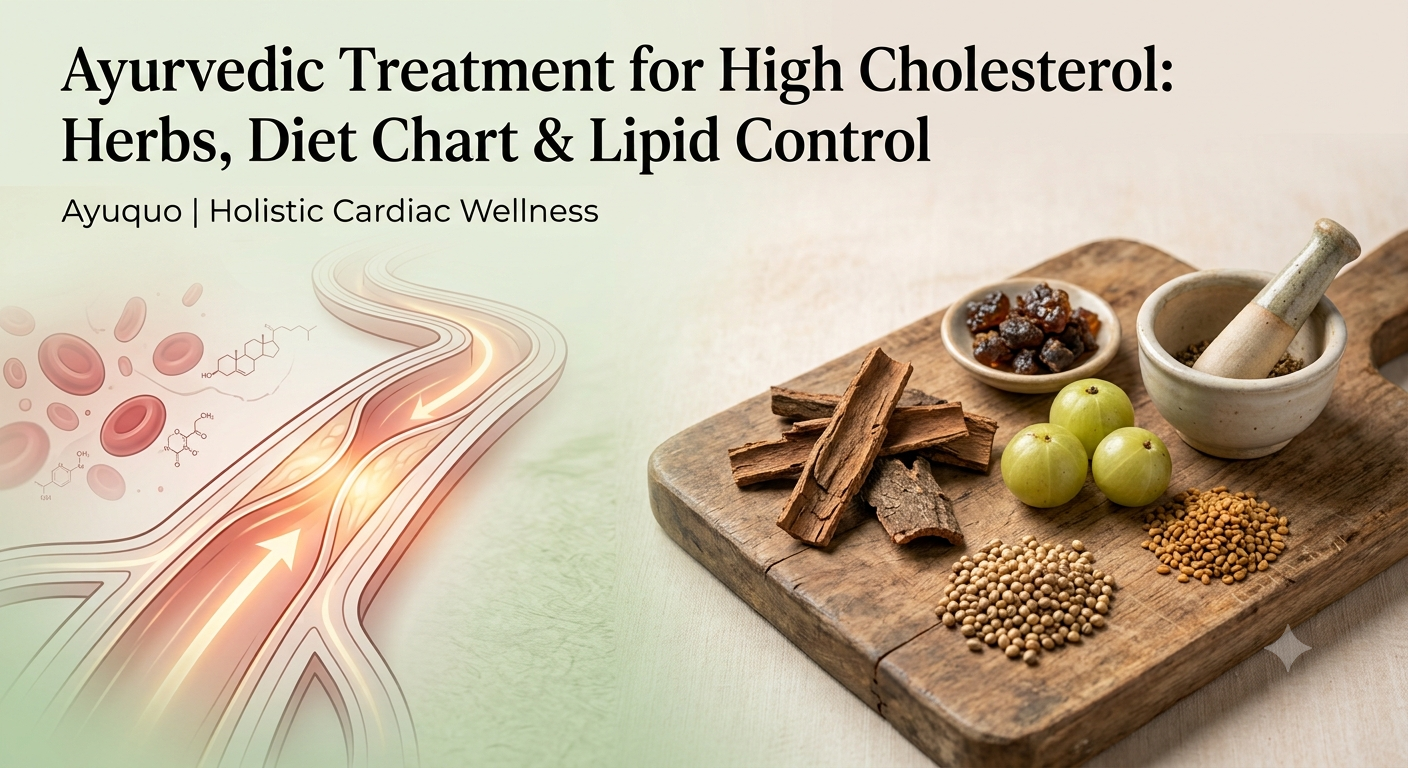
Ayurvedic Treatment for High Cholesterol: Herbs, Diet Chart & Lipid Control
High cholesterol is often termed a "silent condition" because it produces no immediate pain or warning signs. Yet, behind the scenes, elevated low-density lipoprotein (LDL) and high triglycerides silently cause plaque buildup in the arterial walls, increasing long-term cardiovascular risks.
In urban hubs like Noida, Ghaziabad, and the wider Delhi-NCR region, busy desk jobs, late dinners, high-stress schedules, and reliance on processed foods have made lipid profile imbalances increasingly common among adults aged 25 to 55.
While modern medicine often relies on lifelong statin therapy, Ayurveda focuses on resolving the root metabolic cause. Instead of simply suppressing lipid numbers, classical Ayurvedic care aims to correct fat metabolism (Meda Dhatu Agni), cleanse systemic toxins, and clear arterial pathways naturally.
High Cholesterol in Ayurveda: Understanding Meda Dhatu & Ama
In Ayurveda, cholesterol is not inherently "bad." Lipids are considered essential body fats (Meda Dhatu) that lubricate organs, support cell walls, and protect blood vessels.
However, problems arise when Agni (the body's central metabolic fire) becomes sluggish. Weak digestion leads to the formation of Ama—sticky, toxic metabolic residue. When Ama combines with unbalanced Kapha dosha and excess Meda Dhatu, it creates dense, sticky deposits that clog the micro-channels (Srotas) of the circulatory system.
Weak Metabolic Fire (Agni) ──> Toxic Accumulation (Ama) ──> Clogged Blood Pathways (Srotas) ──> High LDL & Triglycerides
To reverse this condition, Ayurvedic treatment focuses on:
Igniting Digestive Fire (Deepana & Pachana): Burning off toxic Ama.
Scraping Excess Lipids (Lekhana): Clearing fat deposits from arterial walls.
Restoring Liver Balance (Yakrit Function): Boosting the liver's natural ability to process fats efficiently.
Top Ayurvedic Herbs to Lower Cholesterol Naturally
Certain Ayurvedic herbs contain potent bio-active compounds scientifically shown to aid fat metabolism and support arterial health:
1. Arjuna (Terminalia arjuna)
Arjuna is revered as a premier cardiotonic herb. Rich in natural antioxidants and flavonoids, it strengthens heart muscles, improves vascular tone, and helps prevent the oxidation of LDL cholesterol—a primary cause of arterial plaque formation.
2. Guggulu (Commiphora mukul)
Famous for its Lekhana (fat-scraping) properties, Guggulu resin contains active guggulsterones. Clinical studies indicate that Guggulu helps increase the liver's uptake of LDL from the bloodstream, naturally supporting balanced total cholesterol and triglyceride levels.
3. Triphala (Amla, Haritaki, Bibhitaki)
This classic three-fruit combination acts as a gentle systemic cleanser. By regulating bowel function, enhancing liver metabolism, and neutralizing oxidative stress, Triphala prevents fat accumulation in digestive and circulatory tissues.
4. Dhaniya (Coriander Seeds) & Methi (Fenugreek)
Both seeds are exceptional natural hypolipidemic agents. Fenugreek is packed with soluble fibers that bind to cholesterol in the digestive tract, limiting its absorption, while coriander seed decoctions act as natural diuretics that enhance lipid clearance.
7-Day Ayurvedic Diet Chart for Lipid Control
A healthy diet is the cornerstone of cholesterol management. The key principle is to eat warm, light, high-fiber, and easily digestible foods that pacify Kapha and clear Ama.
Meal TimeWhat to Eat (Kapha-Pacifying & Heart-Friendly)What to Strictly Avoid
Early Morning (7:00 AM)1 cup warm coriander seed tea OR lukewarm water with 1/2 tsp methi seed powderMilk tea with white sugar, packaged juices
Breakfast (8:30 AM)Warm barley porridge, oats with a pinch of cinnamon, or vegetable daliyaBakery items, parathas with butter, eggs fried in refined oil
Mid-Morning (11:00 AM)1 seasonal fruit (Apple, Pear, Pomegranate, or Guava)Creamy shakes, sweet yogurt
Lunch (1:00 PM)1–2 Missi roti (chana/barley flour) + Lauki/Karela/Torai sabzi + 1 bowl Moong dalHeavy paneer dishes, white rice, fried curries
Evening Snack (5:00 PM)Roasted chana or 1 cup Green Tea / Tulsi teaDeep-fried samosas, namkeen, biscuits
Dinner (7:30 PM)Light vegetable soup (spinach, bottle gourd, tomato) or Moong dal khichdiLate-night heavy meals, cheese, red meat
Essential Lifestyle & Home Practices
Sip Warm Water Throughout the Day: Cold or iced water slows down Agni and encourages fat deposition. Drinking warm water aids continuous metabolic detox.
Daily Physical Activity: Engage in 30–45 minutes of brisk walking, swimming, or dynamic yoga (Surya Namaskar). Physical movement stimulates fat combustion (Meda Dhatu Paka).
Pranayama for Stress Management: High stress elevates cortisol, which directly boosts endogenous cholesterol synthesis. Practice Anulom Vilom and Kapalbhati for 15 minutes daily.
Eliminate Reused Cooking Oils: Reheating vegetable or mustard oil creates trans-fats that severely damage lipid profiles. Use minimal A2 cow ghee or cold-pressed mustard oil in controlled quantities.
The Ayuquo Clinical Edge: Doctor-Led Lipid Management
At Ayuquo Centrum (Noida) and Ayuquo Herbals (Ghaziabad), under the clinical leadership of Vaidya (Dr.) Piyush Juneja, cholesterol management is rooted in accurate diagnostics and personalized care.
Instead of one-size-fits-all supplements, our clinical approach includes:
Diagnostic Correlation: Detailed evaluation of your standard Blood Lipid Profile alongside Ayurvedic Nadi Pariksha (Pulse Diagnosis) and lifestyle assessment.
Targeted Herbal Formulations: Standardized, pure herbal extracts prescribed in precise therapeutic doses based on your unique metabolic profile (Prakriti).
Panchakarma Therapies for Deep Detox: For individuals with elevated risk factors or chronic metabolic sluggishness, specialized Panchakarma therapies like Virechana (therapeutically guided purgation) and Lekhana Basti help purge deep-seated toxins and recalibrate liver metabolism.
Frequently Asked Questions (FAQs)
1. Can Ayurveda lower high cholesterol without statins?
For mild-to-moderate high cholesterol (and elevated triglycerides), Ayurvedic treatment, dietary changes, and targeted herbs can effectively bring lipid levels back within normal ranges. If you are already taking statins, Ayurvedic treatments can be safely integrated under medical supervision to gradually improve liver function.
2. Is ghee safe to eat if I have high cholesterol?
Pure A2 Cow Ghee, when consumed in small amounts (1 teaspoon per day), helps ignite digestive fire (Agni) without clogging arteries. However, refined oils, butter, hydrogenated fats (vanaspati), and reused cooking oils must be strictly avoided.
3. How soon can I expect results in my lipid profile test?
With consistent adherence to the prescribed Ayurvedic diet, lifestyle modifications, and customized herbal care, noticeable improvements in lipid parameters are typically visible in repeat blood tests within 6 to 12 weeks.



28/12/2025