
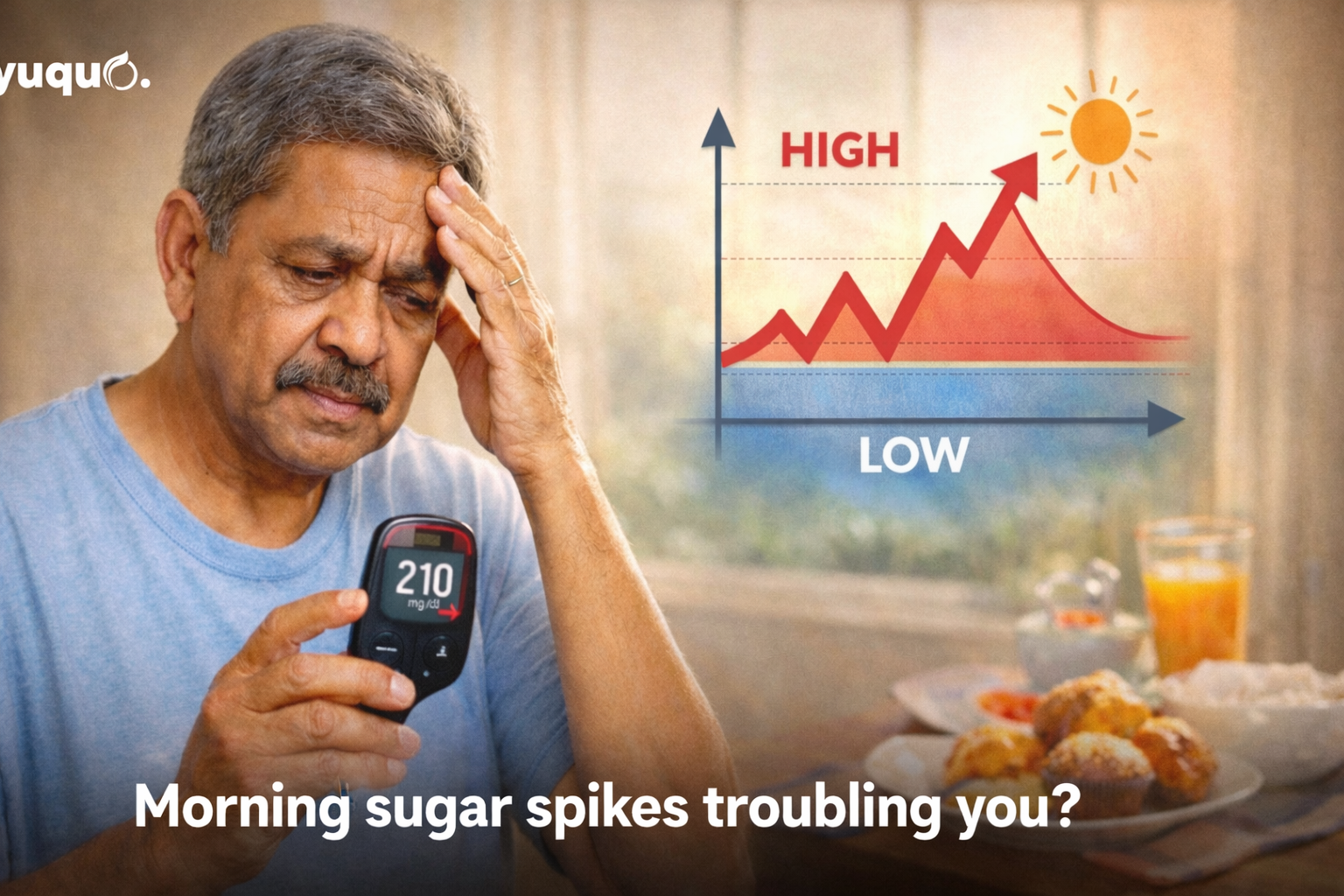
Waking up to a high fasting sugar reading can feel discouraging.
You ate carefully.
You avoided sweets.
You slept properly.
Yet the glucometer shows 170… 190… even 220 mg/dL.
If this sounds familiar, you are not alone.
Morning sugar spikes are extremely common in people with prediabetes, Type 2 diabetes, insulin resistance, and metabolic syndrome — especially in urban Indian populations.
But here is the important part:
High morning sugar is not random.
It is a metabolic signal.
Let us understand the science — and the Ayurvedic perspective — behind fasting blood sugar imbalance.
What Is a Morning Sugar Spike?
A morning sugar spike refers to elevated blood glucose levels immediately after waking up, before eating anything.
This is also known as:
• High fasting blood sugar
• Dawn phenomenon
• Early morning hyperglycemia
In many patients, daytime sugar may appear controlled, but fasting glucose remains high.
This pattern suggests deeper metabolic imbalance rather than just dietary excess.
Why Does Blood Sugar Rise in the Morning?
Between 3 AM and 8 AM, the body releases hormones such as:
• Cortisol
• Growth hormone
• Glucagon
• Adrenaline
These hormones increase glucose production in the liver to prepare your body for waking up.
In a healthy system, insulin balances this rise.
However, when insulin resistance is present, blood glucose remains elevated.
Common reasons include:
• Poor insulin sensitivity
• Chronic stress
• Fatty liver
• Late-night meals
• Abdominal obesity
• Hormonal imbalance
• Inadequate sleep
This explains why many patients in Noida, Ghaziabad, and Rohini report persistent morning sugar spikes despite medication.
The Ayurvedic View: Why Fasting Sugar Becomes High
In Ayurveda, diabetes correlates with a condition called Madhumeha.
But Ayurveda does not isolate sugar levels.
Instead, it evaluates:
• Agni (digestive fire)
• Meda dhatu (fat tissue metabolism)
• Ojas (vital energy)
• Dosha imbalance (primarily Kapha and Vata)
When Agni becomes weak:
• Digestion slows
• Metabolism weakens
• Ama (toxins) accumulate
• Insulin resistance increases
Morning sugar spikes often reflect weak overnight metabolic processing.
This is why simply lowering sugar numbers without improving digestion does not give long-term stability.
Symptoms Associated with Morning Sugar Imbalance
Many patients experience:
• Heavy head on waking
• Mid-morning energy crash
• Brain fog
• Cravings for carbohydrates
• Abdominal heaviness
• Increased thirst
• Irritability
These are not random symptoms.
They are metabolic warning signs.
Common Indian Lifestyle Triggers
In metro cities like Noida and Ghaziabad, certain habits worsen fasting sugar:
Urban stress + sedentary routine = insulin resistance.
A Traditional Ayurvedic Support Ritual
One commonly practised natural support method is soaked fenugreek seeds.
How to use:
Soak 1 teaspoon methi dana overnight in water.
In the morning, drink the water and chew the softened seeds.
Traditionally observed benefits:
• Supports insulin sensitivity
• Helps regulate fasting blood sugar
• Improves digestion
• Supports metabolic activation
• May reduce morning sugar fluctuations
Important: This is supportive — not a substitute for professional care.
Persistent diabetes requires structured treatment.
Why Controlling Numbers Alone Is Not Enough
Many patients focus only on reducing glucometer readings.
However, long-term diabetes management requires correcting:
• Digestion
• Sleep rhythm
• Stress hormones
• Liver function
• Body fat distribution
• Hormonal balance
Temporary sugar suppression does not equal metabolic healing.
When Should You Seek Professional Evaluation?
Consult a specialist if:
• Fasting sugar stays above 130 mg/dL
• Morning sugar exceeds 180 repeatedly
• HbA1c remains elevated
• Fatigue persists despite medication
• You have central obesity
• Sugar fluctuates unpredictably
Early intervention prevents complications like:
• Neuropathy
• Kidney damage
• Retinopathy
• Cardiovascular risk
How Ayurvedic Diabetes Management Works Differently
At Ayuquo, we do not treat sugar as just a number.
Our approach includes:
• Detailed prakriti analysis
• Digestive strength assessment
• Sleep pattern evaluation
• Stress profiling
• Hormonal rhythm assessment
• Liver and metabolic support
Treatment goals:
• Improve insulin sensitivity
• Strengthen Agni
• Reduce inflammation
• Balance hormones
• Stabilise fasting sugar naturally
Locations:
Ayuquo Centrum – Noida (Ayurvedic Hospital)
Ayuquo Herbals – Ghaziabad (Ayurvedic Clinic)
Ayuquo – Rohini
Can Morning Sugar Spikes Be Reversed?
In prediabetes — yes, significantly.
In Type 2 diabetes, improvement is possible with structured metabolic correction.
However, ignoring fasting hyperglycemia gradually worsens insulin resistance.
Early correction gives better outcomes.
Long-Term Natural Strategies to Improve Fasting Sugar
Along with medical supervision:
• Eat dinner before 8:30 PM
• Reduce refined carbohydrates at night
• Improve sleep quality
• Practice stress management
• Engage in light evening walks
• Support digestion with guided herbs
Remember:
Metabolism resets gradually, not overnight.
Conclusion
FAQ SECTION
1. Why is my fasting blood sugar high in the morning?
High morning blood sugar can result from the dawn phenomenon, insulin resistance, stress hormones, or poor overnight metabolic regulation.
2. What is the dawn phenomenon in diabetes?
The dawn phenomenon refers to early morning hormonal release that increases blood sugar levels between 3 AM and 8 AM.
3. Can Ayurveda help control morning sugar spikes?
Ayurveda focuses on improving digestion (Agni), metabolism, and hormonal balance, which may help stabilize fasting blood sugar levels when done under professional guidance.
4. Is soaked methi good for diabetes?
Fenugreek seeds are traditionally used to support insulin sensitivity and digestion, but should not replace medical treatment.
5. When should I see a doctor for high fasting sugar?
If fasting blood sugar remains consistently above 130 mg/dL or frequently crosses 180 mg/dL, consult a qualified specialist.
6. Can fasting sugar levels be reversed?
Prediabetes can often be improved with lifestyle correction. Type 2 diabetes can be better managed with structured metabolic support.









28/12/2025