
Ayurvedic Treatment for Hypothyroidism & Thyroid Imbalance: Remedies & Diet
Are you constantly struggling with unexplained fatigue, weight gain despite light meals, cold sensitivity, or thinning hair? High TSH levels and sluggish thyroid function have become increasingly common in today’s high-stress urban lifestyle.
In fast-paced cities like Noida, Ghaziabad, and Delhi NCR, long screen hours, irregular meal timings, chronic stress, and hormonal disruption affect thousands of adults—especially women—dealing with thyroid imbalances.
While conventional care focuses primarily on synthetic hormone replacement (thyroxine supplementation), Ayurveda addresses the root metabolic imbalance. Rather than just managing hormone levels externally, classical Ayurvedic treatment aims to reignite your tissue metabolism (Dhatu Agni), unblock metabolic pathways, and restore natural thyroid balance.
Hypothyroidism in Ayurveda: Understanding Galaganda & Agni Mandya
In classical Ayurveda, the thyroid gland is closely associated with Galaganda (swelling or dysfunction in the throat region) and is driven by an imbalance in Kapha and Vata doshas.
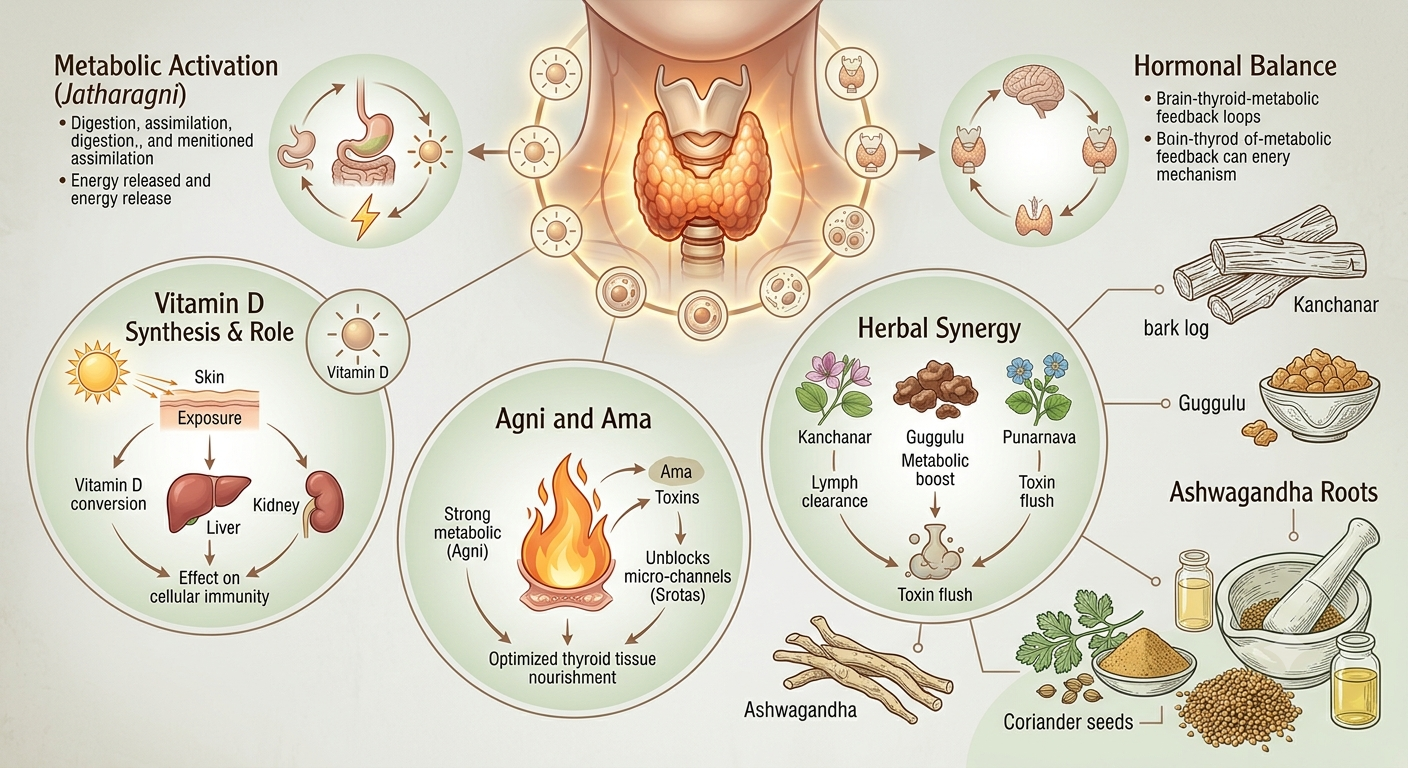
The root cause of hypothyroidism lies in Agni Mandya—a sluggish metabolic fire at both the digestive level (Jatharagni) and the cellular level (Dhatu Agni). When cellular metabolism slows down, Ama (sticky, toxic residue) accumulates in the body's micro-channels (Srotas), blocking tissue nourishment and causing sluggish glandular function.
Sluggish Metabolism (Agni Mandya) ──> Toxic Buildup (Ama) ──> Clogged Micro-Channels (Srotas) ──> Low Thyroid Activity & High TSH
To reverse this metabolic slowdown, Ayurvedic treatment focuses on:
Igniting Metabolic Fire (Deepana & Pachana): Clearing cellular toxins (Ama).
Clearing Channel Obstructions (Srotoshodhana): Removing blockages around glandular tissues.
Balancing Hormonal Axis (Kapha-Vata Shamana): Restoring natural energy and hormonal rhythm.
Top Ayurvedic Herbs to Balance Thyroid Function
Targeted Ayurvedic herbs work synergistically to improve glandular secretion and boost cellular metabolism:
1. Kanchanar (Bauhinia variegata)
Kanchanar is the primary herb for lymphatic and glandular health. Traditionally formulated as Kanchanar Guggulu, it helps scrape away excess Kapha deposits, clear lymphatic blockages, and reduce glandular swelling or sluggishness in the neck area.
2. Ashwagandha (Withania somnifera)
Chronic stress elevates cortisol, which directly inhibits thyroid hormone production and conversion (T4 to T3). Ashwagandha acts as a powerful adaptogen that reduces cortisol levels, supports adrenal health, and naturally stimulates thyroid hormone output.
3. Guggulu (Commiphora mukul)
Guggulu possesses potent Lekhana (fat-scraping and metabolic-boosting) properties. Active compounds in Guggulu help stimulate thyroid activity, enhance conversion of T4 into active T3, and manage weight gain associated with hypothyroidism.
4. Jalakumbhi & Dhaniya (Coriander Seeds)
Coriander seed water is a rich natural source of essential minerals that gently balance thyroid function and flush out excess fluid retention (edema) caused by sluggish metabolism.
Thyroid-Balancing Ayurvedic Diet Chart
Managing hypothyroidism requires a diet that stimulates cellular metabolism, pacifies excess Kapha, and minimizes inflammatory foods.
Meal TimeWhat to Include (Metabolism-Boosting & Light)What to Avoid (Goitrogenic & Heavy)
Early Morning (7:00 AM)1 glass warm Coriander seed water (soaked overnight & boiled)Cold water, milk tea, packaged juices
Breakfast (8:30 AM)Warm oats porridge with a pinch of cinnamon/ginger, or vegetable daliyaRaw cruciferous vegetables (cabbage/cauliflower), refined flour (maida)
Mid-Morning (11:00 AM)1 fresh seasonal fruit (Apple, Pomegranate, or Guava)Creamy smoothies, sugary snacks
Lunch (1:00 PM)1–2 Jowar/Ragi/Barley rotis + Lauki/Torai/Moong dal + buttermilk with cumin powderExcess soy products, heavy dairy, cold salads
Evening Snack (5:00 PM)Roasted makhana or 1 cup Tulsi-Ginger herbal teaFried snacks, bakery goods, cold carbonated drinks
Dinner (7:30 PM)Warm vegetable soup with black pepper and turmeric, or light vegetable khichdiLate-night dinners, heavy paneer, processed meats
Essential Lifestyle Practices for Thyroid Health
Daily Sunshine & Vitamin D Exposure: Spend 15–20 minutes in early morning sunlight. Vitamin D deficiency is directly linked to autoimmune thyroid conditions (such as Hashimoto's).
Neck-Specific Yoga & Pranayama: Practice Ujjayi Pranayama (Ocean Breath), Sarvangasana (Shoulder Stand), and Matsyasana (Fish Pose) daily to stimulate blood circulation in the neck and thyroid region.
Avoid Raw Goitrogenic Foods: Vegetables like broccoli, cabbage, cauliflower, and kale contain goitrogens that can interfere with iodine uptake. Always cook these vegetables thoroughly before consuming.
Sip Warm Water Throughout the Day: Warm water aids digestion, prevents fluid retention, and maintains optimal cellular metabolism.
The Ayuquo Clinical Edge: Doctor-Led Thyroid Care
At Ayuquo Centrum (Noida) and Ayuquo Herbals (Ghaziabad), thyroid management goes beyond symptom relief. Guided by Vaidya (Dr.) Piyush Juneja, our clinical approach focuses on long-term metabolic rehabilitation:
Comprehensive Diagnostic Evaluation: Combining blood reports (TSH, Free T3, Free T4, Anti-TPO) with Ayurvedic Nadi Pariksha (Pulse Diagnosis) to determine your specific Doshic imbalance.
Personalized Herbal Protocol: Custom formulations of pure, standardized extract combinations tailored to your metabolic rate and stress levels.
Supervised Panchakarma Therapies: For chronic or resistant cases, specialized Panchakarma treatments such as Virechana (systemic detox) and Nasya (nasal administration of medicated oils) help stimulate central brain-thyroid feedback loops and clear deep tissue toxins.
Frequently Asked Questions (FAQs)
1. Can Ayurveda reduce TSH levels naturally?
Yes. By addressing cellular metabolism (Dhatu Agni) and clearing Ama, Ayurvedic herbs and dietary corrections can help optimize thyroid function and bring elevated TSH levels back toward normal limits.
2. Can I take Ayurvedic thyroid medicine alongside my daily Thyroxine tablet?
Yes. You should not stop your prescribed thyroxine medication abruptly. Ayurvedic care is integrated safely alongside your existing prescription. As your thyroid parameters improve over time, your attending physician can gradually taper the synthetic hormone dosage based on regular blood tests.
3. How long does it take to see results with Ayurvedic thyroid treatment?
Most patients report improvements in energy, digestion, and reduced swelling within 4 to 6 weeks, while stabilization of TSH levels in blood reports typically occurs over 3 to 6 months of consistent care.







28/12/2025